

Modesty has long suffered from misinterpretation, often reduced to a shallow performance of holiness rather than understood as a spiritual and aesthetic discipline. In many circles, it has been framed as repression—an over‑covering of the body meant to signal righteousness while the heart remains unchanged. Yet Scripture consistently reveals that God has never been persuaded by the manipulation of fabric. He has always been concerned with the interior life. “For the LORD seeth not as man seeth; for man looketh on the outward appearance, but the LORD looketh on the heart” (1 Samuel 16:7, KJV). Any conversation about modesty that begins with hemlines rather than the heart is already theologically off‑course.
True modesty is not the erasure of beauty, nor is it the denial of one’s physical presence in the world. It is not the suffocating impulse to hide oneself under layers of fabric in an attempt to appear sanctified. Excessive covering can be just as immodest as excessive exposure when the motive is pride, fear, or the desire to control perception. A woman can be fully clothed and still be immodest if her presentation is driven by vanity or spiritual performance. Likewise, she can wear a bikini at the beach and remain modest if her heart is governed by dignity, purity, and contextual intelligence. Modesty is not a costume; it is a posture.
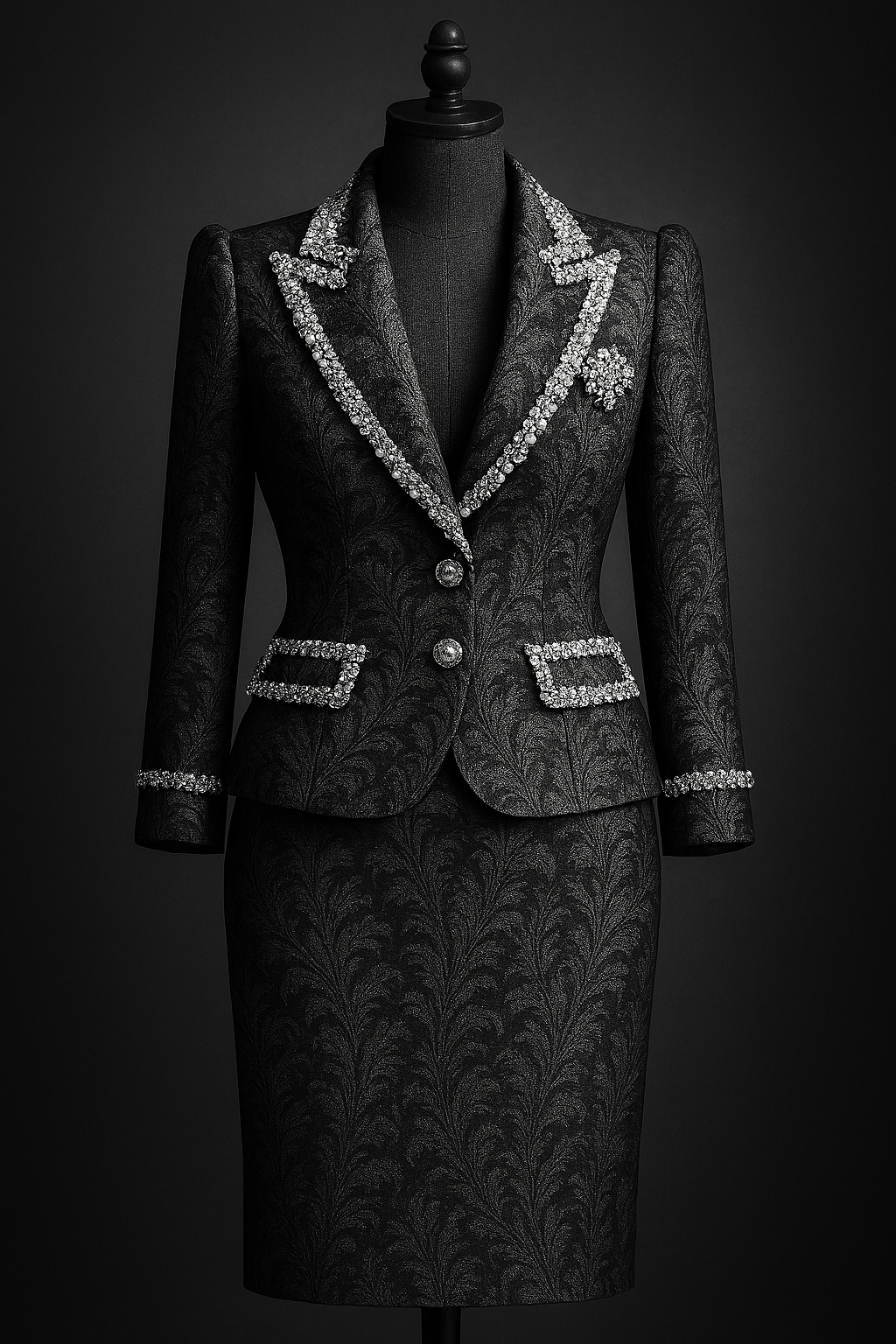
Scripture’s vision of modesty is rooted in balance, wisdom, and self‑governance. It is the ability to discern what honors God, honors oneself, and honors the environment one is in. A swimsuit at the beach is appropriate. A suit in the boardroom is appropriate. A gown at a formal event is appropriate. Modesty is not about hiding; it is about honoring. It is the refusal to weaponize clothing for attention, manipulation, or rebellion. It is the quiet strength of a woman who understands that dignity is her true adornment. “Strength and honour are her clothing” (Proverbs 31:25, KJV). The biblical woman is not drab, muted, or aesthetically suppressed. She is clothed in “silk and purple” (Proverbs 31:22, KJV), garments historically associated with craftsmanship, royalty, and intentional presentation. Scripture does not reject beauty; it sanctifies it.
The heart remains the central axis of modesty. Peter’s instruction to women is not a prohibition against adornment but a reordering of priorities: “Let it be the hidden man of the heart… even the ornament of a meek and quiet spirit, which is in the sight of God of great price” (1 Peter 3:4, KJV). The issue is not the presence of adornment but the absence of inner formation. Modesty is the outward expression of an inward reality—a heart that is governed, disciplined, and aligned with God.
To practice modesty daily is to approach clothing as stewardship rather than spectacle. The body is a temple, not a billboard, and the wardrobe becomes a form of testimony rather than a tool of seduction or self‑exaltation. “Know ye not that your body is the temple of the Holy Ghost… and ye are not your own?” (1 Corinthians 6:19–20, KJV). This understanding reframes fashion as a spiritual discipline: the intentional curation of garments that reflect identity, assignment, and reverence.
When Paul instructs women to adorn themselves “in modest apparel, with shamefacedness and sobriety” (1 Timothy 2:9, KJV), he is not prescribing a universal dress code. “Shamefacedness” refers to reverence, not shame, and “sobriety” refers to self‑control, not suppression. The emphasis is on the disposition of the heart, not the measurement of the fabric. Modesty, therefore, becomes a lifestyle of wisdom—an ongoing negotiation between beauty and restraint, expression and discipline, presence and purpose.
In a world obsessed with extremes—either hyper‑sexualization or hyper‑repression—biblical modesty stands as a call to equilibrium. It invites the Christian woman to inhabit her body with dignity, to dress with contextual intelligence, and to present herself with the quiet authority of someone who knows who she is and Whose she is. Modesty is not a retreat from beauty but the refinement of it. It is not the silencing of femininity but the sanctification of it. It is the alignment of the heart with God, expressed through the language of clothing.
When the heart is rightly ordered, the wardrobe follows. And when the wardrobe follows, modesty ceases to be a rule and becomes a rhythm—an elegant, disciplined, spiritually grounded way of moving through the world.
Authored By Osaromwenyeke King Osemwota.
Discover more journal articles written by Osaromwenyeke King Osemwota.