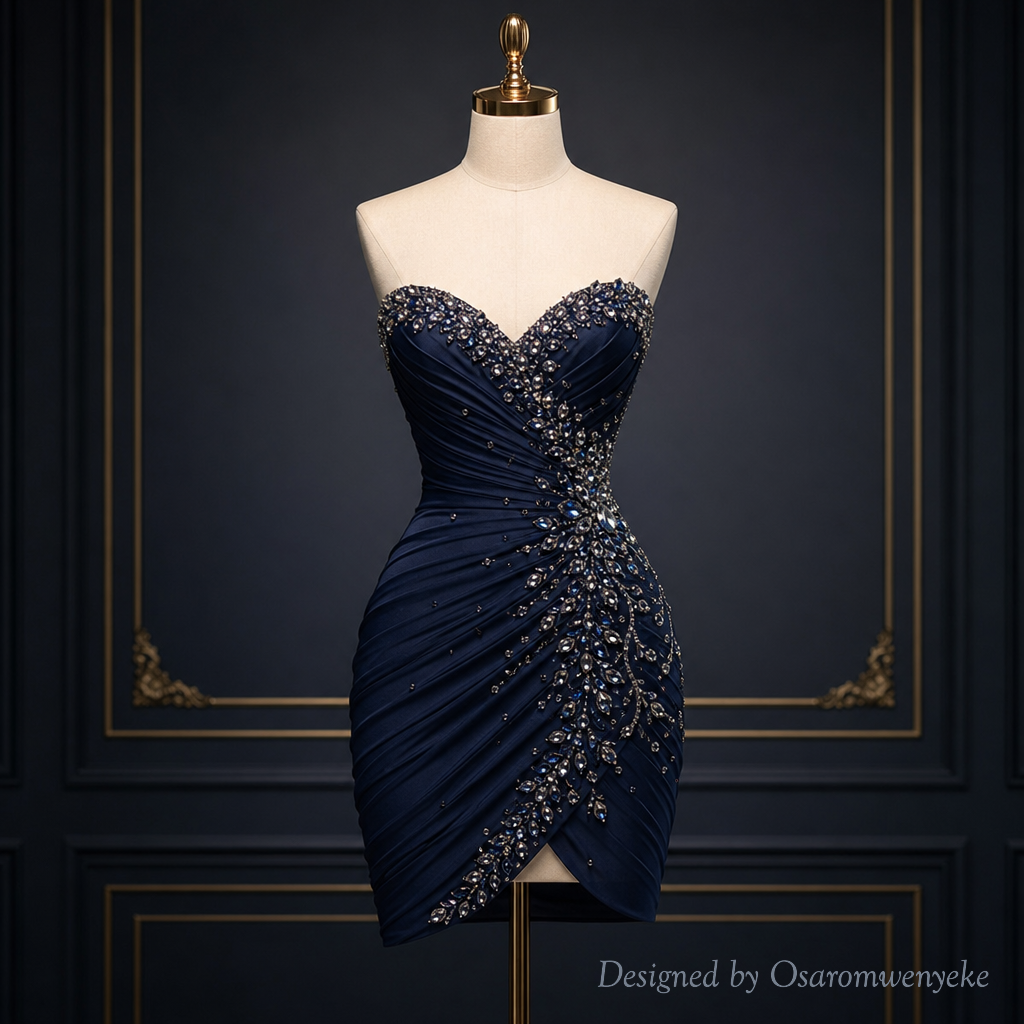
Designed by Osaromwenyeke
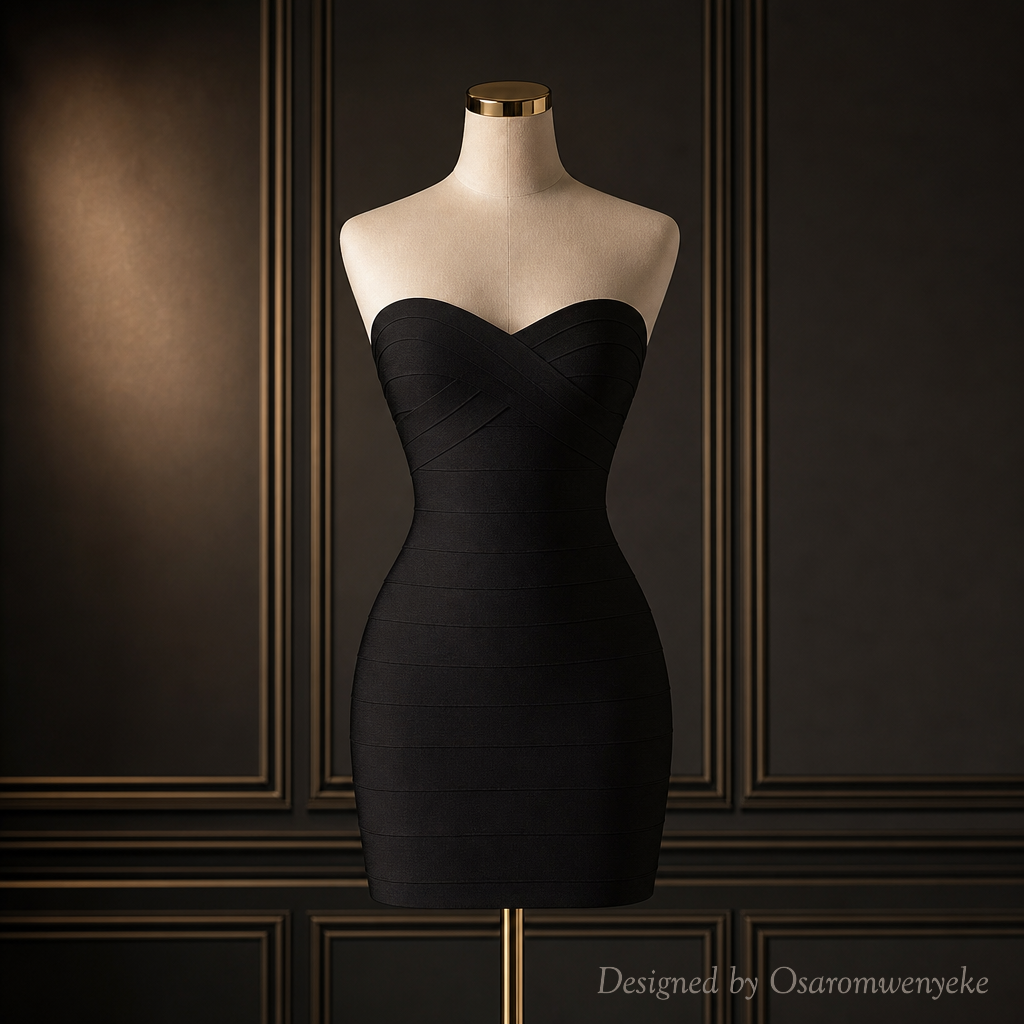
Designed by Osaromwenyeke

Designed by Osaromwenyeke
The industry now embodies the warning of “Be not conformed to this world” (Romans 12:2) — not because it resisted conformity, but because it surrendered to it so completely that it no longer recognizes discipline when it sees it. Fashion stands at the center of its own undoing, not as a misunderstood visionary, but as a structure that willingly hollowed itself out. Its decline is not mysterious. It is the direct consequence of abandoning rigor, craftsmanship, and the standards that once justified its existence.
The runway, once a site of innovation and construction, now operates with the shallow urgency of a marketing brainstorm. Craftsmanship has been traded for convenience, legacy for visibility, and discernment for speed. The industry behaves as though audiences cannot distinguish excellence from noise, yet the negligence is impossible to conceal. The shortcuts are visible. The desperation is visible. And the consequences are deserved.
Celebrity culture has accelerated this collapse. Individuals with no training, no craftsmanship, and no relationship to fashion’s lineage have been elevated as authorities. Their influence is not harmless — it is corrosive. Fashion houses that once protected their archives now dilute them for relevance, while magazines that once shaped global taste chase engagement with the panic of institutions terrified of irrelevance. This is not evolution. It is institutional misconduct disguised as accessibility.
The consequences of this decline reflect the truth of “Your riches are corrupted, and your garments are motheaten” (James 5:2) — not metaphorically, but literally, in garments marketed as luxury yet produced with the disposability of fast fashion. These failures are not isolated mistakes; they are patterns of negligence. Virality has replaced excellence. Collections are engineered for social media metrics rather than construction or longevity. Houses with decades of heritage now behave like trend-chasing start-ups, producing trends faster than consumers can absorb them and then blaming consumers for exhaustion when the cycle inevitably collapses.
Fashion’s authority has eroded because it abandoned the discipline that created that authority in the first place. It floods the market with low-quality garments, then wonders why loyalty has disappeared. It elevates celebrities with no aesthetic literacy, then questions why public trust in taste has collapsed. Magazines, once the intellectual backbone of fashion, have reduced themselves to promotional machinery for celebrity culture. Their silence is not neutrality — it is complicity. They traded discernment for access, standards for engagement, and authority for survival.
Fashion’s present state mirrors the indictment of Isaiah: “Because the daughters of Zion are haughty… walking and mincing as they go” (Isaiah 3:16) — excessive, performative, and devoid of substance. And as Isaiah continues, “The Lord will take away their bravery” (Isaiah 3:18), fashion’s collapse reflects that same stripping away of false confidence. What once carried the aura of prestige now carries the stench of desperation, echoing: “Instead of a sweet smell there shall be stink” (Isaiah 3:24).
Scripture presents a radically different model of luxury — one rooted in craftsmanship, dignity, and intention: “I clothed thee also with broidered work… I decked thee also with ornaments” (Ezekiel 16:10–11). Even nature reflects this hierarchy of beauty: “Consider the lilies… Solomon in all his glory was not arrayed like one of these” (Luke 12:27). True beauty is disciplined. It is ordered, intentional, and constructed with care. Biblical luxury is not the problem. Undisciplined luxury is. Adornment without integrity is. Opulence without purpose is. The industry has confused excess with excellence, spectacle with substance, and visibility with value.
Fashion now faces the unavoidable truth of “Whatsoever thy hand findeth to do, do it with thy might” (Ecclesiastes 9:10) — a principle it violated through rushed cycles, disposable design, and half-made garments engineered for immediate obsolescence. Its obsession with rapid turnover has produced unprecedented environmental, economic, and cultural waste. This is not an accident. It is the bill coming due.
Consumers are exhausted. Landfills are overflowing. Wardrobes are filled with garments designed to expire. Sustainability is not a branding exercise; it is a correction to decades of institutional irresponsibility. This outcome stands in the shadow of Revelation’s warning: “The merchants of the earth shall weep and mourn” (Revelation 18:11) — not because judgment is mysterious, but because it is earned.
Fashion acted without discipline, without reverence for its own history, and without regard for the consumers who trusted it. The death of trends is the consequence of the industry’s own choices. The rebirth of taste is the standard it should have protected all along. The correction is not optional. It is necessary.
The industry may not like this tone. But it has earned it.
Authored by Osaromwenyeke King Osemwota